Sunday, May 9, 2010

Mary Ella Hickman Prophecy and Fred's Dry Wheat Farming

In the "History of the Neeley Ward" compiled by Norma Christensen Weber in Legacy of Faith: Our Jubilee Year authored and published by the Public Affairs committee of the American Falls, Idaho Stake of the Church of Jesus Christ of Latter-day Saints in American Falls, ID in 1998 there is an interesting description of a prophecy given by a "Mrs. Kohlhep." The dating is difficult to tell, as Norma jumps from topic to topic, and not always in chronological order. The information proceeding the one with Mrs. Kohlhep is in 1934. If the following story was a Mrs. Kohlhep in 1934, it is difficult to know who it could refer to, since none were living in Idaho by that point that are related to me. However, there is good evidence that suggests it was earlier:
(1) The golden grain prophecy makes no sense in 1934 and would not have been ridiculous.
(2) Norma discusses the building of the OSL RR, which was in the late nineteenth century.
(3) Fred Kohlhepp is mentioned as introducing grain, and he died in 1919.
(4) Most importantly, she dates Mrs. Kohlhep's wosrds as coming true shortly after 1904 when the American Falls branch (this was actually in 1906) was established.

I think this clearly points to a late nineteenth century dating, and with the Kohlhepps being part of the ward, and the history noting Fred, it only makes sense that the Mrs. Kohlhep is Mary Ella. So on to the interesting account. It reads on page 36:

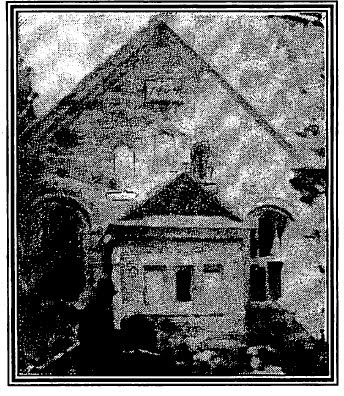
A Warm Creek irrigation company was formed and built wooden flumes to carry the water to all of the homes in the Neeley area, and each family bought shares according to their needs. There was much contention and back biting in the little ward over the water. Mrs. Kohlhep prophesied in tongues that if they didn't stop quarreling, it wouldn't be long before strangers would move in and take over the land. She also said that all of the land between Neeley and Rockland would be as one big field of waving grain. People laughed and thought her a little queer because there was no water for the land, and they couldn't picture raising grain without water. The Oregon Shortline railroad was built through American Falls which created a good market for wheat. Fruit orchards were planted. Stately lombardy poplars were planted for wind breaks. Our house was a log house with a sod roof and one year father was replanting his tulip bulbs and had more than he had room for, so he tossed the rest of the bulbs onto the roof. Much to the delight of everyone passing by the next spring, we had tulips blooming on our roof. Soon homesteads were being taken up and dry land wheat was being grown. Fred Kohlhep was the first of these to try the wheat. His home was just above Indian Springs on the Cold Creek. The old log school house was now too small, and so a new church was built in about 1899. The bricks were made and burned on the sight and were a soft orange red color. Clay from the warm stream proved to be ideal for this. Sandstone for trim came from the stone outcrop on the eastfork of Cold Creek. The new church was completed in 1904 and within a shorttime and when the church became a branch of the American Falls Ward, Mrs. Kohlhep's words had come true.

This account shows the prominence of spiritualism within the Kohlhepp family. I had read in some of Annalee Kohlhepp Skarin's mystical writings on how her mother prayed in tongues, but I wasn't sure what to make of the source. That this History substantiates Annalee's claims shows that Mary Ella was known to some extent for her spiritual gifts: prophecying and speaking in tongues. She was also known for them coming true to some extent, even if thought of as "a little queer." It makes it less surprising that Annalee thought she might have spiritual gifts herself, such as healing, and eventually as she conceived of it, the power of translation.

Besides this, it does note Fred being one of the first for introducing dry wheat farming into the region. It also notes where the Kohlhepp's home was: "just above Indian Springs on the Cold Creek."

There are also some fun pictures of ward buildings and histories of the wards Fred and Mary Ella attended in the book. I have uploaded the account of the prophecy and ward building pictures below.


Annalee Kohlhepp Skarin Baptism

From the passenger list of the S. S. Cedric, I learned that Fred was heading home from Liverpool to Boston on August 1, 1907. Although I don't know exactly when he got home to Idaho, it was probably within the month of August. I wouldn't be surprised if Fred had spent some time with his family in Boston before reaching home, but it would not have been too long. The next document I have regarding Fred is the certificate of the baptism and confirmation of his daughter Anna Olea (Annalee)Kohlhepp.

The certificate is dated December 10, 1907 in Rockland (for the Rockland ward, perhaps?), Idaho. It dates Annalee's birthdate as July 7, 1899 in American Falls, Idaho. It claims that she was baptized on November 7, 1907 by Fred, whose priesthood standing is listed as Seventy, and confirmed by an L. R. Stewart. The bishop at the time was Ephraim Ralphs, and the clerk was E. L. Howard.

I don't know exactly when people were baptized after reaching the "age of accountability," but it may have been the case that the Kohlhepps waited on the baptism of Annalee until Fred could get home from his mission and perform the baptism himself.

Saturday, May 8, 2010

Richard K. Bridge Journal 2: 25-29 September 1905

I continue on the side-by-side comparison of Richard K. Bridge's and Frederick Kohlhepp's missionary journals regarding the journey they made to Liverpool and Zurich together.

UPDATE: Scans are now uploaded for your viewing pleasure. Feel free to help me transcribe difficult words I could not make out.


25 September 1905 (Monday)
Richard K. Bridge's JournalFrederick J. Kohlhepp's Journal
I got up after breakfast[,] so I went with out. I went on deck and saw the smoke of a boat about 20 miles away[.] next I went to the library[.] I stayed there till dinner time[.] then after dinner I slept a little[.] [p.6] studied some German[.] at 530 PM we had tea[.] nothing to note, the sea is calm[.] went to bed about ten thirty PM.
[Ship coordinates are] Longitude [-]38.42 Lattitude 48.21[.] The weather has been pleasant all day with [a] breeze from [the] N.E. We sighted some porpoise [or dolphins] this afternoon not far from the ship. My appetite is good aboard ship and I am feeling well, but I feel anxious to arive at my field of labor. Sighted steamer bound for Liverpool, about noon, was loaded heavy, and sailing slow. We past it in a few hours. I have a birth [berth] to myself about amidship. Spent the day reading some + walking the deck. It is very monotinous on a ship. Our company are all feeling well now. Three more missionaries bound for Switzerland + Germany came aboard at Boston.[:] Bro’s. [Herbert] Flamm, [Harry] Shepherd, + [Richard] Bridg[e]. [It’s] 9 P.M. [and I’m] going to bed. [p. 5]
26 September 1905 (Tuesday)
[The next two entries are largely covered by a meal menu for 24 September 1905, making large parts of the text elligible].

I got up this morning [. . . had breakfast]. went to the library [. . .] I've gone through the [. . .] as usual. I'm getting [. . .] the sea especially[.] morning see the sun rise. [. . .] see it go down[.] nothing [. . .] an old gentleman died [. . .] I can[']t learn his [. . .] if they are going to [. . .] sea. It is just two [. . .] morning service[.] I left [. . .] about half past [min? . . .] bed.


Cloudy + somewhat cold, Have not been on deck much today. Spent the day mostly in the Laibrary + in my birth [berth] and chatting with the brethren. [A] Man died on board last night. unknown.

Names of our party. Where bound.


Bro. Flamm + Wife Germany


“ Baker + “ England


“ Webster “


“ Pike “


“ Kohlhepp Germany


“ Fife Scotland


“ Chris. Mortensen Denmark


“ Frank Mortensen “


“ Jorgensen “


“ Brown England


“ Midgely “


“ [Harry] Shepherd Germany


“ [Richard] Bridge “


“ Reeves England [p.6]


“ Hardy England


“ Anderson England


“ Hoagland Sweeden


“ Hatch England


“ Rich England


Sister Boyer “

27 September 1905 (Wednesday)
I woke at 6-15 [. . .] [no??]time as usual[.] [. . .] the dead man last night at midnight[.] I've been sea sick all day[.] I went to bed early[.]
The man who died aboard [on Monday night] was consigned to the waves last night at midnight. Gulls were sighted near ship [in] the morning, A bird called mother Carey’s chicken fell on the deck last night. [The] Sea [is] quite rough this morning. [Ship coordinates are] Lat. 50-13 Lon. [-]19-27[.]
68 Hoechgasse [Höschgasse]
Zürich
Switzerland
Co/ S. F. Ballif [Serge F. Ballif]
Bought stamps, and mailed two letters on board. [p. 7]
28 September 1905 (Thursday)
I got up late[.] I didn't feel very good till we sighted land[.] it looked like a small black rock sticking out of the water[.] this was about eleven o[']clock. We passed several boats[.] some going to America, we passed Fastnet light house about three o[']clock[.] [p. 7] nothing of importance till we passed Daunts Rock at five thirty[.] this is considered the eastern Atlantic sea board[.] About six o[']clock we met the ferry boat Island[.] they took the people to Queenstown[.] I went to bed about ten thirty[.]
Rough sea in the morning and windy. Came in sight of the coast of Ireland about noon. We had a good view of the shore [and] passed some sailing vessels, Also passed [the] Steam Ship Majestic bound from Liverpool to New York, [at] about 3 P.M. Arived at Queenstown [at] 6 P.M. [A] Small Steamer came alongside + took on passengers + baggage. Also the mail, bound for Queenstown. I have been a little sea sick today. Passed [the] Fastnet light house [at] 3 P.M. [and] Daunts Rock at 6 P.M.
29 September 1905 (Friday)
This morning I got up about seven o[']clock[.] we had breakfast at eight o[']clock[.] at eleven we got off the beat[.] went to the custom house about twelve noon[.] took the car for Norton St[.] We arrived at the Hotel Iles #34[.] at half past twelve we had dinner[.] got up to #10 Holley road about two[.] we received our instructions from Apostle [Heber J.] Grant[.] I got my transpor[t]ation[.] fixed up[,] got back to the Hotel at six o[']clock[.] we had supper about seven o[']clock[.] we all went out and helf a street meeting[.] we sang "O[,] my Father." the elders prayed + talked and distributed trac[t]s. we went back to the hotel[.] I went to my room[.] finished to day[.] journal we have two candles[.] I think Liverpool is as old as the hills[.] every thing looks a hundred years behind the times[.] the street cars single track [p. 8] and double deck[.] you pay a penny for a ride[.] they give you a ticket that [is] in your hand till you get of[f.] then walk at the side of the horses[.] then is one [horse?] in front of the other. I'm going to bed now[.]
Arived in Liverpool [at] 12.30 P.M. We were met by Elders at the wharf and were conducted to a hotel where we had diner, after [p. 8] dinner we went to the conference house at #1 Holly Road Where we received instruction in regards to our missions, Bro. Heber J. Grant gave us some splendid countsil and instruction. I leave for London at 12.30 P.M. tomorrow, from there we go to Paris, from there to Zürich.


Thursday, May 6, 2010

Richard K. Bridge Journal 1: 19-24 September 1905

In this entry, I will be recording passages from the journal of Richard K. Bridge, the missionary who travelled with Fred across the Atlantic together to the Swiss-Geman mission. I located his 1905-1908 journal in the Church History Library in Salt Lake City, where it is labelled as Church Archives MS 17402. Unfortunately, I was only able to access a microfilm of the manuscript, where some of the pictures are placed over the tops of the text, making some parts of pages illegible. I will try to place these entries and their dates side-by-side with Fred's missionary journal, of which a copy was in the possession of my mother. I have transcribed this journal and will eventually get to making it available.

But on to Richard's journal. In the entries when they refer to people or places I will try to add in brackets the full names of the people, or the real names of the places. They often spelled the names of the people phonetically and not gramatically, and so one can get confusd if they are not aware of the proper spellings. I have also placed in punctuation in the brackets. Words that I cannot make out I will place in bracket with question marks corresponding to the number of letters in the word. Hopefully, when I post the scans some of you will be able to help me read them! When a page number ends in the original document, I also place the page number in brackets (i.e., [p. 3]).

UPDATE: Scans I have now placed below; feel free to help me with the words I could not make out. Thanks!

I will not comment or make questions about these journal entries until I get through posting them all. They will only go up to 2 October 1905, when the two elders part ways.


19 September 1905 (Tuesday)
Richard K. Bridge's JournalFrederick J. Kohlhepp's Journal
We arrived at Fall River at 6 AM[.] we took the the N. Y. N. H. H. R. R. [New York, New Haven, and Hartford Railroad] at 6[:]40 arriving at Boston at 8 AM[.] went to #84 State St and arranged for my berth on the Arabic [II] sailing for Livepool on the 21st. from there I went to the Haymarket Hotel just south of the North Station[.] nothing else to note so I went to bed about 10.30 PM.
Father [Johann Friedrich Kohlhepp] gave some history of his people in German[y.] Father’s cousin, Urban [Kohlhepp], [lives] in Salsungen [Bad Salzungen], in a village called Laimebach [Leimbach], Fathers mothers folks also live in Laimebach [Leimbach]. I went to visit Eda [Kohlhepp] on the 19th found her looking very bad. In Oct, she will go to Los Angeles Cal, for her health.
20 September 1905 (Wednesday)
I got up about seven o clock[,] wrote letters till 10.30 AM[,] went down to Wyman's for breakfast[.] came back to the hotel[.] met some fellows all went over to the White Star Pier in Charlestown[,] checked my trunk then Ed [Elder] Rich and myself went over to the navy yard[.] we went on board the Frig[a]te Constitution[,] the boat has played a great part in the naval history of the United States[.] she cost over $3000.00. [p. 3] We next visited several boats that were out of com[m]ission[.] some were in dry dock[,] some weren[']t[.] The boat Detroit was undergoing an overhauling[.] we then walked down through the residence part of the yard[.] nothing to note except some of the sailors were playing rugby[.] In front of the barracks are several modern cannons[,] some very old ones[.] a large eagle made of tin[.] they also have a [w?ele?] telepgraph station[.] then just as we were about to go we saw four guards[.] they had about twenty sailors cleaning up the grounds[.] they wore plain gray sails[.] the fellows were serving time on the [chain gang?]. I then went to the hotel[,] wrote some letters[,] had dinner[,] then I went down Washington Ave. I got home about 930 PM[,] went to bed[.]
On the 20th Anna [Conhepa] and I went to visit the Ship Arabic [Arabic II], which sails from Charlestown harbor on the 21st Sept. I visited the Art Museum with our company.
21 September 1905 (Thursday)
I got up about seven o['] clock[.] did some writing[.] I had breakfast about 9 o[']clock[.] we all took a stroll over to [the] Bunker hill monument[.] when we were coming back we got lost[.] found our way by taking a street car to town[.] [p. 4] At noon I went up to the office of the White Star Line[.] got some mail[.] I went back to the State House[.] from there to lunch[.] we took an elevator and subway [???][.] from there we got our cases[.] went down to the dock[.] I went on board at 2.30 PM and we set sail at 230 PM. we had the [???] [?????] out into the atlantic[.] we saw boats of every kind coming + going[.] On the coast is a large Port belonging to the U. S. walked around on board till supper time[.] I had supper[.] went to bed about 11 o[']clock[.]
Fathe[r] made me a present of 10 Dollars, + Anna [Anna Kramer Schneidt?] of two dollars. Left Charlestown [at] 3:30 P.M. [I am staying in] Birth [berth] No. 130.
22 September 1905 (Friday)
I got up about 730 AM[.] washed + had breakfast[.] then went on deck[.] the sun shown[.] it was warm the sea was calm[.] it did justice to the good things of the [c???tt] thri[??] this day I went to bed at 9.30 PM.
Weather was fair. [p. 3] Spent the day reading + walking about the deck, also wrote [a] letter home.
23 September 1905 (Saturday)
I got up at 6.10 AM[.] got washed[.] walked the deck till breakfast[.] I finished reading the book If I were King about 11 o[']clock[.] we studied German till 1230 when we had dinner. the weather has been fog[gy] for the last 18 hours[.] it has rained all day this after- [p. 5] noon. we studied some more German at 5.30[.] we had tea[.] went up on deck for about an hour[.] well it has been another day that I've been able to sit up and take a little [munshunt?] thrice.[It is] Wet and foggy. Bro Fife + Jorgenson are somewhat sea sick. I am feeling well so far, I have taken a bath on board ship which has done me good. I feel that the Lord is with me on this journey. British Art Gal[l]ery Walker R. [in] Liverpool. Off [the] banks of New Foundland [at] noon [on] the 23rd [of] Sep. with rain and fog.
24 September 1905 (Sunday)
I got up eight o[']clock[.] had breakfast at 1030 AM[.] we had Babptist [sic.] service[.] this only lasted about an hour[.] I again went on deck and walked till dinner time which is at 1230 PM. then I went up on the top deck[.] did some reading[.] went to sleep till tea time 530 PM[.] at about 7 PM we had a nother babtist [sic.] service [.] the first time they passed the plate--they got 12/7[.] I thought the sermons they preached were very poor[.] I then went to the library where we stayed till 11 PM [when] they turn out the lights[.] then I went to bed[.]
Sunday still foggy. [There are] Baptist Missionaries bound for India + other points of the eastern lands to preach to the heathens [on board], [they] held meetings at 10-30 a.m + 7 p.m[. which ] I attended. 9 P.M. still foggy. [The] fog horn [is] blowing every few minutes. The sea has been calm so far. retired for bed. [at] 9 P.M. [p. 4]


Wednesday, May 5, 2010

Kohlhepp House Burnt Down

Although I have yet to post the accounts by Fred and Eda where the family home(s) burnt down, I have found his newspaper article which validates their claims. This is in a June 1894 Salt Lake Tribune. It reads:

Fainted Beyond the Flames.

Narrow Escape of a Pocatello Woman and Child in a Fire.
Pocatello, Ida., June 16 [1894].--Special to Tribune.--The residence and furniture belonging to Mr. Kohlhepp was totally destroyed by fire last night at 12 o'clock. Mr. Kohlhepp was in Ogden in the hospital, and no one was at home except his wife and child. A fire broke out in the building about 10 o'clock, but was discovered by Mrs. Kohlhepp, who, with the assistance of neighbors, succeeded in extingushing the flames as they thought, before that had gained much headway, but at 12 o'clock the fire broke out again.

Mrs. Kohlhepp was awakened by the noise and ran out into the yard with her child and fainted. She was found in an unconscious condition upon the arrival of some neighbors. Had she not gotten out in the yard, she, together with her child, would have been burned to death, as the house was falling in before any one arrived on the ground. The origin of the fire is not known. The building and furniture were insured for $300. The loss is $1500, including a fine piano.

This interesting article shows many things:

1. We learn from it that the Kohlhepps did enjoy music, owning a "fine piano" in their home.

2. Fred was in Ogden (staying with Minerva Wade, his mother-in-law, perhaps?) for hospital visits. He seems to have struggled with illness throughout his life.

3. Only Ella was at home with one child. I imagine this would have been Eda, the youngest at the time (she had been born in 1893). So where were the others: Marie, Minerva, and Fred?

4. They were smart enough to get insurance, but the coverage wasn't good. Makes you wonder why they had the insurance--had it happened before? Was it common to get fire insurance in Idaho?

5. This points to the Kohlhepp superstition about fire being controlled by Satan or some demonic power, as I have read in some Kohlhepp correspondence. The source in the article is listed as unknown. Ella thought she had put out the fire and then it restarted. They grew suspicious about these events.

I will post the image of this article soon, it is on my other computer.

Viva Kohlhepp Sketch

While Fred was on his mission in Switzerland and Germany, Minerva Kohlhepp (Teichert) claimed she sent him a sketch(es) of his son Viva (Survivor). I located this sketch at the BYU Museum of Art Collection of Minerva Teichert's work. This sketch, or something like it, could be much like the one she sent Fred. It is difficult to read the note on the bottom. It says something like "A rough sketch of Viva[,] little ex[?????] baby with [. . . bottom line illegible]." Anyway, it is obviously an early sketch for Minerva, and Viva is very young in it. Viva was born in 1903, Fred went on his mission in September 1905 and returned in August 1907. It is hard to tell Viva's exact age from this sketch, but he does appear to be 3-4 years old, which would be when Fred was on his mission.

Tuesday, May 4, 2010

Sunday School Work

Both Fred and Mary Ella served/worked in Sunday Schools in American Falls, Idaho. I don't know how Sunday Schools were structured back then: was it like a Sunday seminary class? I believe it was much more like a school than how we have sunday school as an hour of the 3-hour block meetings today. Fred served in two Sunday Schools: the American Falls and the Neeleyville Sunday Schools. I found some records of this in the Jubilee History of Latter-day Saints' Sunday Schools: 1849-1899 (Salt Lake City: Deseret Sunday School Union, 1900).

The Neeleyville Sunday School began in September 1882, and Fred is listed as the superintendent of that Sunday School from August 1896 to July 1899. This Sunday School grew a lot in 18 years (it only goes up to 1900, when the report was published of course) from 4 officers and 13 pupils to 14 officers and 72 pupils. The school convened in the district schoolhouse of Neeleyville, Oneida County, Idaho. I bet that this district schoolhouse could be located, or pictures of it be found if I looked for them, or went out to Neeleyville. This information was found on page 266.


The American Falls Sunday School began April 9, 1899, and started with about the same amount of pupils when the Neeleyville Sunday School began (4 officers, 12 pupils). Fred is listed as its "first assisant and secretary," from November 1 to December 31, 1899. Given that the report only goes up to 1900, it seems safe to assume Fred was still following through with these duties in 1900. It also looks like Fred transitioned from being the Superintendent of the Neeleyville Sunday School (July '99) to working in the American Falls school (November '99). Fred's wife, Mary Ella, is also listed as the "second assistant" in the American Falls Sunday School from April 9, 1899 to November 1, 1899, when she was replaced by Gertrude Rowberry. The school convened in the ward schoolhouse, which again I imagine I could locate.

Mary Ella Hickman's Musical Compositions

I noted in my last entry how I had substantiated/verified that Mary Ella did write musical lyrics, and have noted how her, Fred, and the Kohlhepps enjoyed writing poetry. I thought I would share the two musical lyrics of Mary Ella's that I have located. I found these in the Library of Congress' Catalog of Copyright Entries: Musical Compositions, Part 3. Volume 8, Part 1, No. 1-5. Washington: Government's Printing Office, 1913.

The first is "Where the Climbing Wild Roses Bloom." In the catalog, it is entry #3842 on page 229. The words are listed as being written by Ella Kohlhepp (or "E. Kohlhepp" to be specific) and the music being written by Charles J. W. Jerreld (I do not know who this is). Then, I suppose it lists a company name: Washington, H. Kirkus Dugdale co., inc. The copyright is dated as December 31, 1912 (New year's day bang!). Then there is a "2 c." date (I imagine this is the second copyright) for February 3, 1913. The copyright is stated as belonging to "Ella Kohlhepp," in Misa [today's Mesa], Arizona. The Arizona location might surprise someone, but the Kohlhepps were living in Arizona at this time (another thing I will have to get to posting). Lastly, there is some code: E301766. I do not know what these stand for.


The second is "The Bachelor." In the catalog, this is entry #2328 on page 142. Again, the words are written by Ella, the music by Jerreld, and the same company is listed. The same copyright dates are also written down, so they must have been copyrighted together at the same time. Again there is a code: E301777.


Now, how would one go about finding the actual words that Ella wrote? I don't know. I have wanted to go through the recent Minerva Teichert papers update at BYU, and rummage through the family poetry that I believe is in the new material. Perhaps I will find that in there. Maybe there is a way to find Jerreld's composition or hnt down the company that was listed. Ugh; ths seems quite the amount of work for little pay off! But that is what we family historians do, no?

Sunday, May 2, 2010

Mary Ella Hickman Shortly after Fred's Death

Documentation of Fred's life after his mission is hard to find. It is especially difficult to find information on Mary Ella once Fred passes away. We know she eventually remarried into the Martineau family, and became estranged from my great-grandmother, Minerva Teichert. The general story is that they became contentious over the parenthood of Constance. Minerva did not believe Constance was her biological sister, while her mother insisted it was so. I don't want to spend a lot of time in the dispute here, but this conflict is definitely an important event for the relationship of Minerva and Mary Ella.

What interests me here is a few news article I discovered regarding an accident Mary Ella had. I'll post the articles throughout in chronological order. Since Fred died in September 1919, this lets me know a litte bit about Mary Ella's life following her husband's death. The first article is from December 25, 1919 from a notice in the Rigby Star:


"Mrs. Ella Kohlhepp, 54 years of age, of American Falls, who is visiting relatives in Salt Lake, suffered a fracture of her left collar bone, lacerations and bruises about her head and probable internal injuries, when she was struck by a street car."

This sounds like a very painful incident for Ella. Given the injury, it's no surprise that months later, a notice appears in the Deseret News on March 17, 1920 that she is suing for damages.


This states, "Woman Asks $20,000. Ella Kohlhepp has begun suit in the [ard] district [ours] against Utah Light & Traction company, for $20,000 damages for injuries suffered from being struck by a street car. She alleged that as she was walking north on State street near Twenty-first South street. Dec. 19, 1919, she was run down by a street car through failure of the motorman to give warning and that she suffered body bruises as a result of the accident."

The following day in the Deseret News in the March 18, 1920 issue, another article reads:


Accident Victim Will Resume Literary Work

Mrs. Ella Kohlhepp who was struck by a street car last December 19, suffering a broken collar bone, will leave soon for her home in American Falls, Idaho. Mrs. Kohlhepp has been working a numbers of years, on a collection of Indian traditions and stories, she knew Chief Pocatello, and from him was able to obtain much data[.] At the time of the accident she was taking a course in English at the University of Utah. As soon as she has arranged her affairs at home she will move to Salt Lake. Two of her lyrics, "Joseph the Prophet" and "His Glory," which Prof. Lund has arranged to the music of "Sweet Afton" and "Oh, My Father" will be sung at general conference in April, she says.
Now, to review what is interesting in these article:

1. Ella must have been having a hard time with a husband that passed away in September and then getting hit by a car in December. It is interesting that the article mentioned her as "Mrs. Kohlhepp," as if she was still married. Perhaps she did not want it known that she was now a widow, or the reporter was not aware that she was?

2. The accident and the course being taken at the University of Utah show that she was dwelling in Salt Lake City following Fred's death in September. At least, I hope it was following, since Fred died in American Falls in mid-September. When did coursework for the University of Utah start in 1920? I imagine it is similar to today, when coursework starts in early September. I hope she was there for Fred's death and funeral! Did she start late into the semester or what? This is interesting. I know Ella had a habit of leaving the home and living different places for long periods of time, so I wonder if she was even there for Fred's final hours. If anything, we at least learn that she was moving on after Fred passed away (or at least planning to do so). She was going to head back home, settle the affairs, and move to Salt Lake.

3. It shows Ella's interests. She was taking a course in English at the U, suggesting she was trying to work on her composition skills for the Indian traditions and stories she was collecting (and perhaps just for general interest). She had received education earlier at the Sacred Heart Academy when she was young (the only one of her siblings to get an education), and this shows she pursued it a bit further. The article mentions that she had been working on collecting the stories for "a number of years," making it a passtime of hers while Fred had been alive. I wonder if some of these tales made it into Minerva's A Romance of Old Fort Hall or Drowned Memories. We also learn that was writing poetry, much as Fred had done (and likely something they did together). While this article claims that two of Ella's lyrics would be sung during the April Conference (quite a venue in Mormon circles), conference reports of the April 1920 General Conference do not suggest they were sung.

In April 1920, the following were sung:

"O say, what is truth?"
"Come, O Thou King of kings."
"Praise to the man who communed with Jehovah."
"Lift Thine Eyes" (Mendelssohn).
"The Spirit of God like a fire burning."
"Hallelujah to the Father" (Beethoven's "Mount of Olives").
"The Lord's Prayer."
"The Lord Victorious" (Mascagni).
"O, Love Divine."
"Now Jesus Loved Martha and her Sister and Lazarus."
"Earth and Heaven."
"As the Earth Brings Forth Her Bud."
"I Will Greatly Rejoice in the Lord."
"Blessed Be the Lord God of Israel."
"I Bring You Glad Tidings."
"Is This the Messiah?"
"Let the Lower Lights be Burning."
"The Palms."
"Do What is right."
"We thank Thee, O God, for a prophet."
"How firm a foundation, ye Saints of the Lord."
"High on the mountain top."
"Guide us, O thou great Jehovah."
"Redeemer of Israel, our only delight."
"Do what is right, let the consequence follow."
"Now let us rejoice."
"O ye mountains high."
"Come, come, ye Saints, no toil nor labor fear."
"Praise God from Whom all blessings flow."
"Come, let us anew our journey pursue."
"One Hundred Years."
"O My Father."

None of these songs resemble those described in the article. Of course, the article claims that "His Glory" would be sung to "O, My Father," but Eliza's hymn was not a tune at all. It, in fact, was sung to many different tunes (in the April 1920 Conference it was sung to the old English tune that Eliza R. Snow preferred), so it is difficult to know which tune Mary Ella was planning/hoping to have her lyric sung to. Now, I don't think Ella was making these songs up. I have located some copyrighted lyrics of hers that were placed to music, which I will post up later. It is likely these were real lyrics she wrote. As for the Mr. Lund, I am not sure who he is. I will have to some investigative work here.

4. She knew Chief Pocatello. Whenever someone claims they knew someone famous, I get suspicious. I haven't read on Mary Ella's childhood in a while, but I don't remember her spending much (if any) time in Idaho before she married Fred. I will have to investigate this. However, Chief Pocatello (the leader of the Shoshoni people of Pocatello, Idaho) died in 1884. He was known for leading attacks against settlers when there was strife between the tribe and the emigrants. Eventually, he made peace with America, and moved his people onto the Fort Hall Indian Reservation, where they strived to survive relocation (dealing with intense starvation in 1875). Mary Ella had her first two children, Marie Elizabeth and Minerva Bernetta in North Ogden, Utah from 1887-1888. Her first child recorded as being born in Idaho is Frederick William in 1891. It seems unlikely that she ever met Chief Pocatello (having died 7 years previous), and if she did, extremely unlikely that she knew him on any sort of deep level. No doubt she eventually knew of him, but that is a completely different kind of knowledge.

5. Her injuries were not insignificant. I am curious if there are any court records associated with the damages she felt she was inflicted (the $20,000). Did the injuries have any lasting impact on her?

The Return from his Mission

Entries in Frederick's Missionary Journal disappear around June 1907, and it became difficult to know when he came home. Fortunately, I discovered the ship manifest for the boat Fred took home from Liverpool to Boston. He sailed from Liverpool on August 1, 1907, aboard the S. S. Cedric (one of the largest ships in the world at this time, used for transportation with the White Star Line). Fred is listed as "Kohlhepp, Fred J.", a 45 year-old married male, who swore he was of American nationality/citizenship.

This ship manifest really helps piece together the end of his mission well. Correspondence in my possession suggested he likely took a different boat and left earlier. Pictures of the manifest and the S. S. Cedric are posted below.