Showing posts with label Neeleyville. Show all posts

Sunday, December 9, 2018

Eastern States Mission - 1896

The records of the Church of Jesus Christ of Latter-day Saints show that Fred was also called to serve in the Eastern States mission. The third volume of the Missionary Department's missionary records (1860-1959) have this entry on page 29, entry 381:


Let's zoom in more closely to the headers and Fred's entry:


To drop this more of a list format:

No: 381
Missionaries' Names: Frederick John Kohlhepp
Names of Parents - Father: Frederick Kohlhepp
Names of Parents - Mother's Maiden Name: Elizabeth Welzler [Wetzler]
When Born - Month, Day, Year: Feb. 13 1862
Where Born - Town, County, State or Nation: Chelsea, Mass.
Date of Baptism - Month, Day, Year: Oct 22 1886
By Whom Baptized: Franklin G. Clifford
In What Quorum: Seventy, 88th Quo.
Present Residence: Neeleyville, Oneida, Ida.
Where Sent on This Mission: Eastern States
When Set Apart - Month, Day Year: " 24 " [June 24, 1896]
When Set Apart - By Whom: " " " [F. D. Richards]
Returned: No entry

Items of interest:

(a) This mission surprises me. I have no record in family history or writings that he served away from his family during this time period. The records show no end date for this mission of his. Did he not end up going, or how long did he serve? I'll need to investigate this further. I am curious who was over the Eastern States Mission at this time, and the region it encompassed.

UPDATE: Another record claims that Fred was superintendent of sunday school from August 1896 to 1899. Given him being set apart in June 24, 1896, if he did end up going, it was a very short time. My belief is that he never made it out there. This was probably a motivator for him choosing to go when a call came the second time.

(b) Notes when Fred was baptized, and by whom. Who was Franklin G. Clifford?

(c) Notes Fred in 88th quorum of the Seventies. Would be interesting to right some on how seventy were organized in late 19th century.

(d) Resident in 1896 in Neeleyville. Not referenced as Neeley at the time.

(e) Set apart by F. D. Richards.


Friday, November 30, 2018

Farewell Party for Enos Neeley

While superintendent of the Neeleyville Sunday School, Fred wrote a notice that was published in the Deseret News on December 11, 1897. The snippet notes:
Neeleyville Ward, Nov. 29 1897. A very pleasant evening was spent here on the 28th at a farewell party to Brother Enos Neeley, who has just started for a mission to the Northern States. Relatives and friends were gathered until our small hall was filled to overflowing. An interesting program was rendered; there were also dancing and a delightful lunch. So much feeling was manifested when the parting time came that few eyes were dry, and it seemed like every one was parting from a dear beloved brother, for Brother Neeley is loved by all our people and respected and honored by all business men in our locality. He refused a prominent position to accept his mission, and we feel that his energy and uprightness will make him a favorite abroad as well as at home. F. Kohlhepp.
Who was Enos Neeley? His name obviously sounds related to the founders of the town (Neeleyville, which became Neeley, Idaho). Enos was set apart by J. Golden Kimball for a mission to the Northern (Northwestern) states, and he served from Dec 1 1897 - March 9 1900. At the time he was only 24 years old, and a bachelor. It's interesting to see the farewell party activities, such as dancing.

Monday, May 10, 2010

Church Callings, Faithfulness, and Character (Lisonbee Account 7)

This is sadly the last entry in Eda Kohlhepp Lisonbee's short history of her father, but I am very grateful to have found it. The last memories and facts she writes are these:
Father was a faithful L. D. S. He was a High Priest, he was a home missionary from American Falls to Malad for 20 years and preached in all the communitites [sic.] and valleys. He was Ward Clerk at Neely and American Falls for many years.

He lived and taught his children the Gospel and the finer things of life. He was always a gentleman. His daughters were always proud to go out with him.

Not long ago I attended Sacrament meeting at Grants Pass, Oregon. The Bishop was Davis Staufer who had been raised near American Falls. He spoke in the meeting, telling the people about father, how he was always a gentleman. He was always dressed neat and clean. He had never seen father without a coat. He also waid [sic.] what a good man he was. I am proud to be a daughter of Frederick John Kohlhepp, and I hope I can hand down to my children some of the things my father taught me.

Written by Eda Kohlhepp Lisonbee
August 28, 1959
My commentary:

1. Church callings. Eda fills us in on Fred's church callings throughout his life. She notes that he did 20 years of home missionary work (likely referring to his calling as a seventy). I wonder if all those years of work on the homefront encouraged him to go on a fulltime mission in Germany. Apparently, preaching the gospel to those around him was no challenge for him. We also learn of his being ordained to be a High Priest (was this standard procedure to ordain someone a high priest if they reached a certain age, or did it signify something else? Did it come with being called to be say, the Ward clerk?) and that he served as a clerk, which would suit his well-educated background.

2. Fred's Gentlemanly attire and personality. Fred seems to have been known for his constant good manners, which he probably learned in Boston. According to Staufer, Fred always watched his appearance and wore a coat. What a strange sight that must have been in rural Idaho and Arizona! Perhaps it worked well in the cold winters, but it seems rather a strange attire for the climate during much of the year.

3. Child's Pride. It looks like Eda really loved her father, and enjoyed having his company. Minerva expressed the same sentiments in many accouts herself. It is impressive how gentlemanly and kind Fred was able to be even with all his illness and suffering. He seems to have inspired goodness in his children.

Sunday, May 9, 2010

Mary Ella Hickman Prophecy and Fred's Dry Wheat Farming

In the "History of the Neeley Ward" compiled by Norma Christensen Weber in Legacy of Faith: Our Jubilee Year authored and published by the Public Affairs committee of the American Falls, Idaho Stake of the Church of Jesus Christ of Latter-day Saints in American Falls, ID in 1998 there is an interesting description of a prophecy given by a "Mrs. Kohlhep." The dating is difficult to tell, as Norma jumps from topic to topic, and not always in chronological order. The information proceeding the one with Mrs. Kohlhep is in 1934. If the following story was a Mrs. Kohlhep in 1934, it is difficult to know who it could refer to, since none were living in Idaho by that point that are related to me. However, there is good evidence that suggests it was earlier:
(1) The golden grain prophecy makes no sense in 1934 and would not have been ridiculous.
(2) Norma discusses the building of the OSL RR, which was in the late nineteenth century.
(3) Fred Kohlhepp is mentioned as introducing grain, and he died in 1919.
(4) Most importantly, she dates Mrs. Kohlhep's wosrds as coming true shortly after 1904 when the American Falls branch (this was actually in 1906) was established.

I think this clearly points to a late nineteenth century dating, and with the Kohlhepps being part of the ward, and the history noting Fred, it only makes sense that the Mrs. Kohlhep is Mary Ella. So on to the interesting account. It reads on page 36:

A Warm Creek irrigation company was formed and built wooden flumes to carry the water to all of the homes in the Neeley area, and each family bought shares according to their needs. There was much contention and back biting in the little ward over the water. Mrs. Kohlhep prophesied in tongues that if they didn't stop quarreling, it wouldn't be long before strangers would move in and take over the land. She also said that all of the land between Neeley and Rockland would be as one big field of waving grain. People laughed and thought her a little queer because there was no water for the land, and they couldn't picture raising grain without water. The Oregon Shortline railroad was built through American Falls which created a good market for wheat. Fruit orchards were planted. Stately lombardy poplars were planted for wind breaks. Our house was a log house with a sod roof and one year father was replanting his tulip bulbs and had more than he had room for, so he tossed the rest of the bulbs onto the roof. Much to the delight of everyone passing by the next spring, we had tulips blooming on our roof. Soon homesteads were being taken up and dry land wheat was being grown. Fred Kohlhep was the first of these to try the wheat. His home was just above Indian Springs on the Cold Creek. The old log school house was now too small, and so a new church was built in about 1899. The bricks were made and burned on the sight and were a soft orange red color. Clay from the warm stream proved to be ideal for this. Sandstone for trim came from the stone outcrop on the eastfork of Cold Creek. The new church was completed in 1904 and within a shorttime and when the church became a branch of the American Falls Ward, Mrs. Kohlhep's words had come true.

This account shows the prominence of spiritualism within the Kohlhepp family. I had read in some of Annalee Kohlhepp Skarin's mystical writings on how her mother prayed in tongues, but I wasn't sure what to make of the source. That this History substantiates Annalee's claims shows that Mary Ella was known to some extent for her spiritual gifts: prophecying and speaking in tongues. She was also known for them coming true to some extent, even if thought of as "a little queer." It makes it less surprising that Annalee thought she might have spiritual gifts herself, such as healing, and eventually as she conceived of it, the power of translation.

Besides this, it does note Fred being one of the first for introducing dry wheat farming into the region. It also notes where the Kohlhepp's home was: "just above Indian Springs on the Cold Creek."

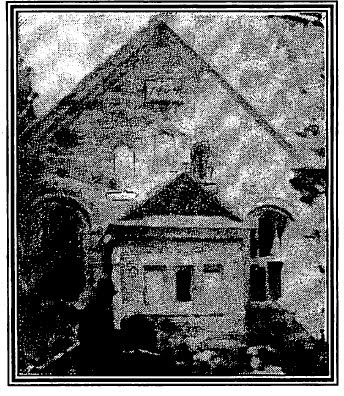
There are also some fun pictures of ward buildings and histories of the wards Fred and Mary Ella attended in the book. I have uploaded the account of the prophecy and ward building pictures below.


Tuesday, May 4, 2010

Sunday School Work

Both Fred and Mary Ella served/worked in Sunday Schools in American Falls, Idaho. I don't know how Sunday Schools were structured back then: was it like a Sunday seminary class? I believe it was much more like a school than how we have sunday school as an hour of the 3-hour block meetings today. Fred served in two Sunday Schools: the American Falls and the Neeleyville Sunday Schools. I found some records of this in the Jubilee History of Latter-day Saints' Sunday Schools: 1849-1899 (Salt Lake City: Deseret Sunday School Union, 1900).

The Neeleyville Sunday School began in September 1882, and Fred is listed as the superintendent of that Sunday School from August 1896 to July 1899. This Sunday School grew a lot in 18 years (it only goes up to 1900, when the report was published of course) from 4 officers and 13 pupils to 14 officers and 72 pupils. The school convened in the district schoolhouse of Neeleyville, Oneida County, Idaho. I bet that this district schoolhouse could be located, or pictures of it be found if I looked for them, or went out to Neeleyville. This information was found on page 266.


The American Falls Sunday School began April 9, 1899, and started with about the same amount of pupils when the Neeleyville Sunday School began (4 officers, 12 pupils). Fred is listed as its "first assisant and secretary," from November 1 to December 31, 1899. Given that the report only goes up to 1900, it seems safe to assume Fred was still following through with these duties in 1900. It also looks like Fred transitioned from being the Superintendent of the Neeleyville Sunday School (July '99) to working in the American Falls school (November '99). Fred's wife, Mary Ella, is also listed as the "second assistant" in the American Falls Sunday School from April 9, 1899 to November 1, 1899, when she was replaced by Gertrude Rowberry. The school convened in the ward schoolhouse, which again I imagine I could locate.